Tuesday, 29 August 2017

20 Unique Apple Cider Vinegar Uses and Benefits

20 Unique Apple Cider Vinegar Uses and Benefits

Apple Cider Vinegar Uses Title
Organic, raw apple cider vinegar is one of my top natural health remedies that I use every day — along with coconut oil.  I recommend it to my patients and drink apple cider vinegar personally for several reasons, including detoxification, helping my body more easily digest foods and for a quick burst of energy.
Also, I include apple cider vinegar uses for personal care reasons like conditioning my hair, whitening my teeth and as a household cleaner.

Apple Cider Vinegar Benefits

New medical research also suggests that apple cider vinegar ingestion can help acid reflux, lower blood pressure, improve diabetes and support weight loss.
The benefits of apple cider vinegar come from it’s powerful healing compounds, which include acetic acid, potassium, magnesium, probiotics and enzymes.
Acetic acid has the ability to kill dangerous “bad” bacteria and at the same time, foster the growth of beneficial “good” bacteria. Because acetic acid kills unwanted bacteria when it comes into contact with it, it essentially acts as a natural antibiotic. This means apple cider vinegar naturally provides numerous benefits related to skin, digestion and immunity health without any side effects.
Additionally, apple cider vinegar is a good source of polyphenols. Research supports the role of polyphenols in the prevention of cardiovascular diseases, cancers, osteoporosis, diabetes and neurodegenerative diseases like Alzheimer’s.

What is the Use of Vinegar? Top 20 Apple Cider Vinegar Uses

Here are the top 20 reasons you should be using apple cider vinegar everyday!
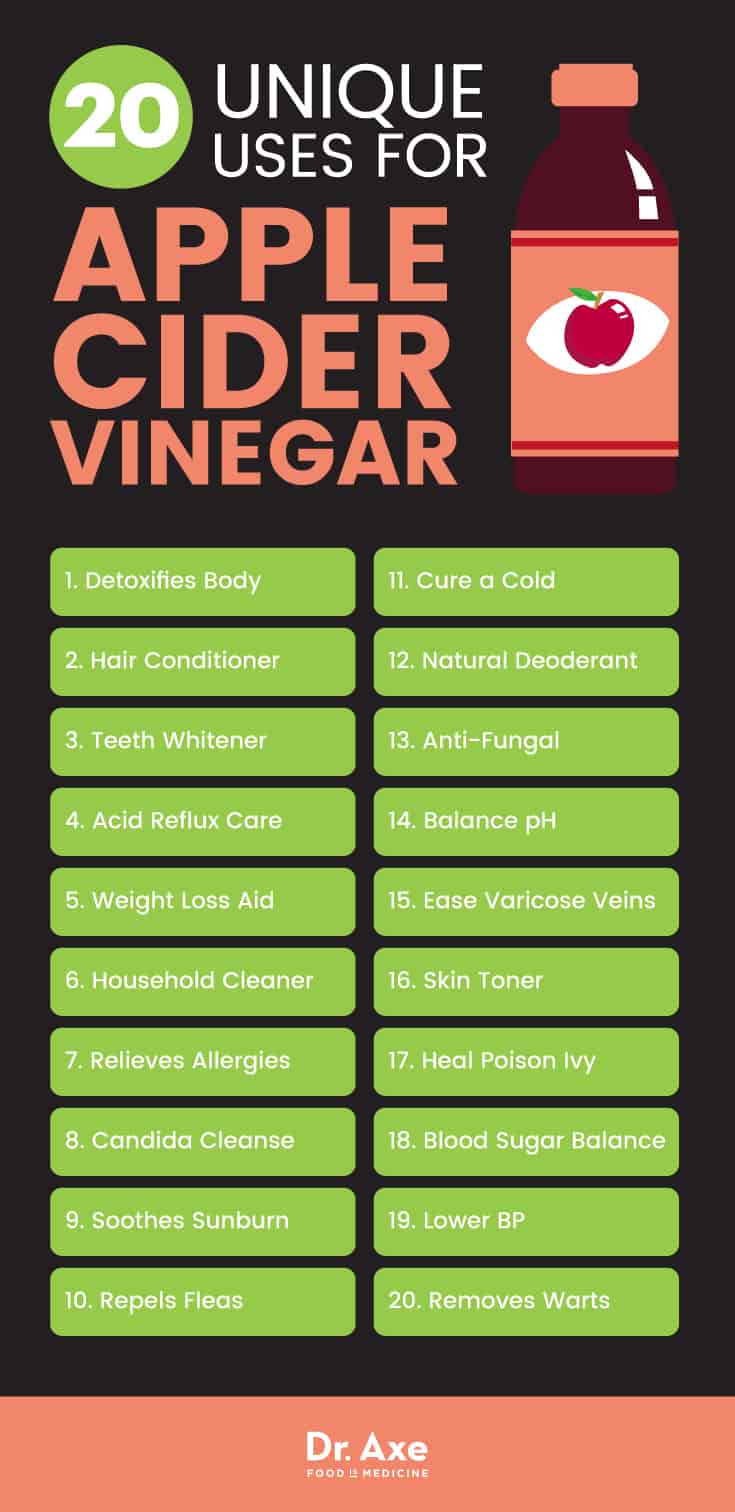
Apple Cider Vinegar Benefits 1. Detox Your Body
Unfiltered apple cider vinegar is a liver and lymphatic tonic which can help detox your body.  It helps balance your body’s pH and stimulates cardiovascular stimulation, bowel motility and lymphatic drainage. For this reason, it’s one of my key ingredients in the Secret Detox Drink.
2. Natural Conditioner to Make Hair Shine
ACV can be used as a natural hair conditioner and makes your hair shine!  Take an old shampoo bottle and fill it with 1 tablespoon of organic apple cider vinegar and 1 cup of water.  Pour this on your hair after shampooing three times per week for best results.
3. Natural Teeth Whitener
One of my apple cider vinegar uses is as a natural teeth whitener. Take your finger and rub apple cider vinegar on your teeth for 1 minute.  Then rinse your mouth with water.  The pH of apple cider vinegar can remove stains from your teeth, which helps naturally whiten.
4. Can Treat Acid Reflux and Heartburn
Some of the main causes of acid reflux and heartburn are an imbalanced stomach pH and lack of enzymes and probiotics.  Apple cider vinegar is full of all of these nutrients. How do you take apple cider vinegar? Add 1 tablespoon of apple cider vinegar to a cup of water and drink it five minutes before meals to relieve acid reflux.
5. Can Kill Candida (Yeast) and Boost Probiotics
Millions of people around the world struggle with candida and yeast.  The side effects can be bad breath, lack of energy, UTI’s and digestive issues.  ACV contains probiotics and a type of acid that promotes the growth of probiotics which help kill off candida. Remove sugar from your diet and consume 1 tablespoon of apple cider vinegar three times daily as part of a candida cleanse.
6. Regulates Your Body’s pH
Apple cider vinegar contains acetic acid, which is acidic in nature but has a more alkaline effect on the rest of your body. Balancing your bodies pH can reduce your risk of chronic illnesses like cancer and can dramatically increase your energy.
7. Can Support Weight Loss and Metabolism
A study published in the Journal of Diabetes Care found that consuming apple cider vinegar could promote weight loss. There are several reasons ACV promotes fat loss, but one of those reasons includes that ACV reduces sugar cravings and improves detoxification.  Another study found that supplementing with the acetic acid found in apple cider vinegar reduced body fat in mice by 10 percent. A 2005 study from the Journal of the American Dietetic Association found that vinegar consumption with a high-carb meal resulted in participants eating/drinking 200 to 275 fewer calories throughout the rest of the day. (1)
8. An All-Natural Household Cleaner
The anti-bacterial properties and the balanced pH of apple cider vinegar make it a perfect household cleaning product. Fill a spray bottle with 50 percent water and 50 percent ACV then spray windows and counters for cleaning.
9. Soothe a Sunburn
One of my favorite apple cider vinegar uses is to soothe a sunburn. Put 1 cup of apple cider vinegar in a lukewarm bath along with ¼ cup of coconut oil and lavender essential oil to ease sunburnt skin.
10. Balances Blood Sugar and Improves Diabetes
Medical research has proven that the acetic acid found in apple cider vinegar can balance blood sugar and improve insulin sensitivity and insulin responses. (2)  You can receive these benefits through apple cider vinegar ingestion. Try organic, raw apple cider vinegar on salads or consume 1 tablespoon in water before meals.

From the sound of it, you might think leaky gut only affects the digestive system, but in reality it can affect more. Because Leaky Gut is so common, and such an enigma, I’m offering a free webinar on all things leaky gut. Click here to learn more about the webinar.

11. Heal Poison Ivy
Organic, raw apple cider vinegar contains potassium, which can help reduce swelling and inflammation, improving poison ivy.  Reducing side effects of poison ivy is also one of the apple cider vinegar uses because it can help detox the poison out of your skin, helping poison ivy heal more quickly.
12. Repel Fleas on your Pets
Mix a 50/50 solution of apple cider vinegar together and soak your pet in a tub.  Do this one time a day for several weeks to rid your pet of a flea infestation.
13. Lower Blood Pressure
In a 2009 12-week study, they found that consuming apple cider vinegar lowered triglycerides and blood pressure significantly.
14. Fight Seasonal Allergies
Another amazing treatment of ACV is for allergies.  ACV helps break up mucous in your body and support lymphatic drainage.  It also supports the immune system and can clear your sinuses.  Put 2 tablespoons in a large glass of water and drink three times daily for allergies.
15. Kill Fungus on Toes and Skin
The anti-bacterial and anti-fungal compounds in apple cider vinegar make it a great natural remedy for skin and toenail fungus.  Simply rub on the area of fungus two times daily.  Also, using a mixture of coconut oil and oil of oregano is great for killing fungus.
16. Skin Toner for Eczema and Acne
The pH of apple cider vinegar makes it an excellent remedy for skin issues. Rub apple cider vinegar on the effected skin or use it as a wash — then put coconut oil and essential oils on the area to support further healing.
17. Ease Varicose Veins
Apple cider vinegar is excellent for varicose veins because it improves circulation in the vein walls and is anti-inflammatory, so it reduces bulging veins.  Combine apple cider vinegar with witch hazel and rub on veins in circular motion and you should see improvements in two weeks.
18. Natural Deodorant 
Bad bacteria and yeast are a major cause of body odor. The armpit can stay damp which also makes it a breading ground for bad bacteria. Simply dabbing some apple cider vinegar on your fingers and running it into your armpit can kill yeast and neutralize odors, keeping you smelling fresh all day.
19. Cure a Cold and Sore Throat 
Apple cider vinegar is the ultimate remedy to cure a cold and sore throat fast! Because it’s loaded with vitamins and probiotic-boosting acetic acid, it’s a great natural cure. Take 2 tablespoons of apple cider vinegar in one glass of water three times daily to cure a cold.
20. May Reduce Warts 
Put apple cider vinegar topically on the wart and then cover with a bandage. Leave on overnight and remove in the morning. You may see results in one week, but it could take longer.
This is only a few of the many apple cider vinegar uses and natural remedies.

Surprising Benefits of Apple Cider Vinegar

ACV has been consumed for 2,000+ years!
Historical records show that apple juice has been fermented into vinegar since before 5000 BC. Through the ages, apple cider vinegar has been used to stimulate circulation, aid in the detoxification of the liver, to purify blood, cleanse lymph nodes, and improve immune system response. In fact, Hippocrates often prescribed it for coughs and colds, when mixed with a touch of honey.
ACV is made in a similar way as other fermented drinks (kombucha, kefir and wine).
Like all fermented products, apple cider vinegar is made using active yeast that is combined with sugar. In this case, it is naturally occurring sugar from crushed apples. The yeast actually consumes sugar and uses this to grow healthy bacteria, which is how fermentation takes place. The best apple cider vinegar for therapeutic and health wellness should be made from certified organic apples. Pasteurization is not required, and is not recommended for people using it for health benefits, as this kills all of the delicate nutrients and enzymes. The acidity of the vinegar is enough to prevent unhealthy bacteria (including E. Coli) from developing. After the fermentation process is completed, the result is the formation of acetic acid, the main beneficial compound found in apple cider vinegar.
ACV can appear murky and have “cobweb-like” strings, but this is a good thing.
This murky brown appearance of ACV, as well as the strands of yeast that may be present, actually clue you in to the fact that the cider is of good-quality. These strands are bits of live yeast, and they are actually alive. These contain the bacteria that once entered into the body, provide various healing benefits.
ACV is extremely low in calories and sugar.
Although it’s made using sugar, the sugar is consumed during fermentation, so you barely ingest any of it in the finished product. ACV has about 3-5 calories per tablespoon, and a little usually goes a long way. So you wind up with a very beneficial drink for virtually no calories or sugar. In fact, one of the biggest benefits of consuming ACV is that it has a positive effect on blood sugar levels, helping to keep them stable and to reduce risk for diabetes or hypoglycemia.
ACV was first used as an a natural disinfectant (and still is today).
Vinegar is known to have anti-fungal abilities and  to kill harmful bacteria and pathogens, so traditionally people used it to clean their homes, bodies, and to fight off fungus from forming. Today, many people still use ACV — and other types of vinegar — for a wide range of cleansing uses.

What is the Mother in the Apple Cider Vinegar?

It is important to note that not all apple cider vinegar is created equally! To get the most out of using ACV, make sure you buy it raw and with the “mother” intact, which means it still contains the beneficial compounds including probiotics.
It is imperative that you select organic, unfiltered and unpasteurized apple cider vinegar to reap its many health and beauty benefits. Also, look for cloudy vinegar; this is the sign that the friendly enzymes and bacteria that promote healing have not been removed. The cloudy strands is what is referred to as the “mother” probiotics.

77 Coconut Oil Uses & Cures

77 Coconut Oil Uses & Cures

Coconut Oil Uses & Cures - Dr.Axe

Coconut Oil 

Coconut oil might just be the most versatile health food on the planet. Not only is it my favorite cooking oil, but coconut oil uses are numerous and can extend to being a form of natural medicine, be used for natural beauty treatments and so much more.
The coconut tree is considered the “tree of life” in much of Southeast Asia, India, the Philippines, and other tropical locations. And today, there are over 1,500 studies proving the health benefits of coconut oil.
Some of the top coconut oil benefits include:
  • Balances Hormones
  • Kills Candida
  • Improves Digestion
  • Moisturizes Skin
  • Reduces Cellulite
  • Decreases Wrinkles and Age Spots
  • Balances Blood Sugar and Improve Energy
  • Improves Alzheimer’s
  • Increases HDL and Lower LDL Cholesterol
  • Burns Fat
If you’re ready to take your health to the next level, try these 77 coconut oil uses and cures!

Click here for your free guide on how to incorporate coconut oil into almost every area of your life!

77 Creative Coconut Oil Uses

These coconut oil uses are broken into 4 categories: Food Uses, Body and Skin Care, Household, and Natural Medicine.

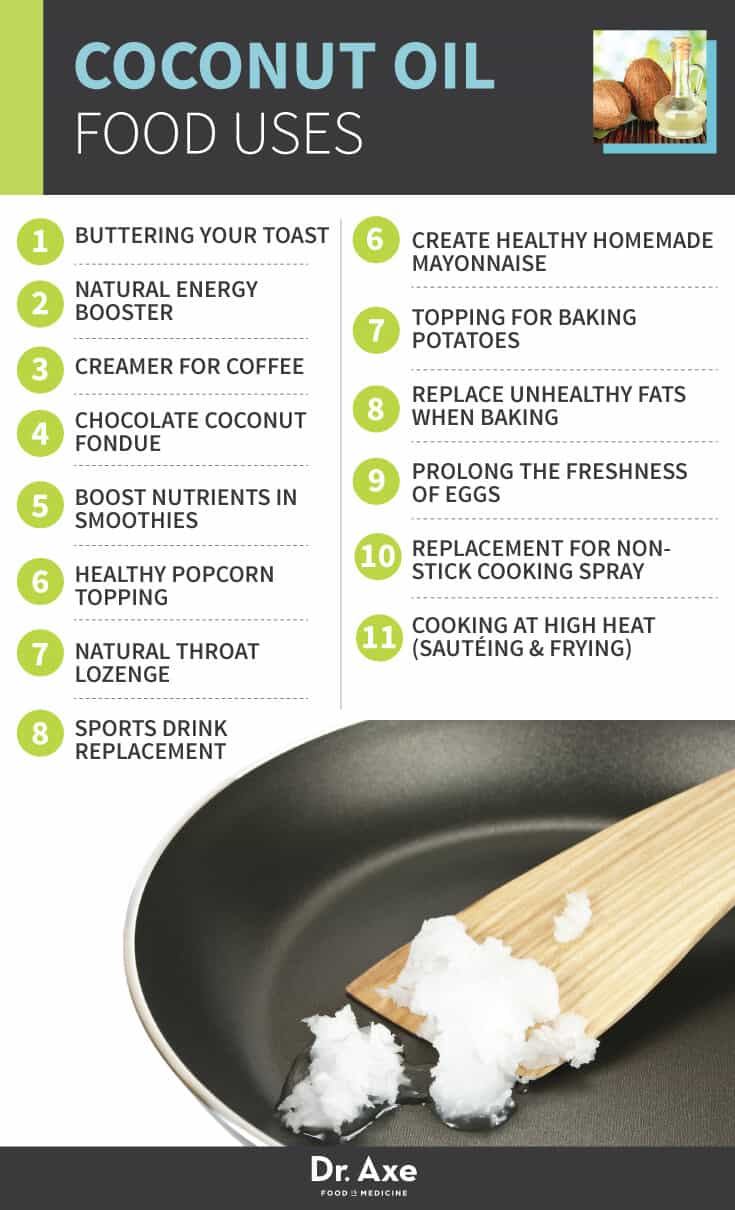
Coconut Oil Food Uses

1. Cooking at High Heat (Sauteing and Frying) – Coconut oil is great for cooking at a high heat because of its high smoke point. Many other oils like olive oil can oxidize when heated but because coconut oil is made up of healthy saturated fats it remains stable under high temperatures.
2. “Buttering  Your Toast” – For breakfast in the morning, try spreading coconut oil on your sprouted grain bread, instead of conventional butter. The slight coconut flavor, more pronounced in the unrefined coconut oils, lends a lovely aroma and taste to your toast.
3. Natural Energy Booster – The medium chain triglycerides in coconut oil, when partnered with chia seeds, will give you an energy boost when you need a mid-afternoon pickup, or after a strenuous workout. Chia seeds are known to boost performance, and endurance while the coconut oil aids in digestion and metabolizing of the chia seeds. Mix 1 tablespoon coconut oil with ½ tablespoon of chia seeds, and enjoy from the spoon, or spread on sprouted grain bread.
4. Creamer for Your Coffee – Adding a spoonful of coconut oil to your coffee can give you an extra boost of energy and replace dairy creamer. If you put your hot coffee in a blender, with the coconut oil and your favorite natural sweetener, and blend, you will be amazed at the rich creamy flavor, without adding any dairy. In the Far East, many athletes blend their morning coffee with coconut oil and grass-fed ghee to increase performance and energy.
5. Chocolate Coconut Fondue – Enjoy dipping fresh fruit into dark chocolate? Well, by using coconut oil, dark chocolate has never been healthier, or easier. Slowly melt 1 tablespoon of coconut oil and 2 cups of chopped dark chocolate (preferably 70% cacao) together over low heat in a double boiler, stirring occasionally. If mixture is too tight, add a touch more coconut oil and stir until warm and melted. Transfer to a fondue pot, and dip with even more health-promoting foods like fresh strawberries, bananas, and sliced apples.
6. Boost Nutrients in Smoothies – Add 1 to 2 tablespoons of coconut oil to any fruit smoothie for a boost of cholesterol fighting compounds. Side benefit? It improves the texture and mouth feel of smoothies, while adding healthy fats to your diet.
7. Healthy Popcorn topping – Remember when you were a kid and visited your favorite theatre for a matinee? Remember the glorious smell that permeated the air? Chances are that it was popped in coconut oil. Pop organic corn kernels in coconut oil and then drizzle with just a touch more melted coconut oil and some sea salt.
8. Replacement for Non-stick Cooking Spray – In a non-stick skillet, sometimes eggs still stick. With coconut oil, that is no longer a problem. Add just a teaspoon or two of coconut oil to the pan, and melt. Add the eggs and cook as desired. Cleanup will be a breeze.
9. Create Healthy Homemade Mayonnaise – Use as oil in homemade mayonnaise recipe mixed with egg yolks. In a blender, combine 4 egg yolks, 1 tablespoon apple cider vinegar, and ½ teaspoon dried mustard. Blend until combined. With blender still running, slowly add 1 cup coconut oil (melted), and ½ cup olive oil to create an emulsion. If you add the oils too fast, the mayo will break. If this happens, all is not lost; add ½ tablespoon of tahini, and blend until smooth.
10. Topping For Baked Potatoes – Put coconut oil on baked sweet potatoes in place of conventional butter and then sprinkle on cinnamon. Also, use it for baked sweet potato french fries with some rosemary and sea salt.
11. Replace Unhealthy Fats When Baking – Yes, you can bake with coconut oil. Use the same amount as butter or vegetable oil that is called for in the recipe. For biscuits, pie crusts, and other preparations where the fat is to be cold, freeze the coconut oil prior to using. Use coconut oil to grease baking sheets and cake pans, and your baked goods will simply slide right out.
12. Make Homemade Healthy Granola- Homemade crunchy granola made using heart-healthy nuts is a great treat for breakfast, or as the star in a fresh fruit parfait in the evenings. Combine 3 cups of old-fashioned oats, 1 cup chopped almonds, 2 teaspoons cinnamon, ½ teaspoon salt, 1/3 cup honey or maple syrup, and 1/3 cup coconut palm sugar together in a large bowl. Melt 1/3 cup coconut oil and drizzle over, and then mix to combine. Bake on a cookie sheet at 350 degrees for 5-7 minutes, and then rotate in the oven, and continue baking for another 5-7 minutes. Turn off oven, and allow to sit for 30 minutes. Remove from oven, and break into clusters.
13. Sports Drink Replacement – Coconut oil gives the body quick energy in the form of its quick acting MCFA fats. Instead of relying on sugary processed drinks, try adding coconut oil and chia seeds to water with fresh fruit.
14. Natural Throat Lozenge – Use coconut oil in place of store-bought lozangers that are usually made using artificial flavors and colors. Try swallowing ½-1 teaspoon of  coconut oil up to 3 times daily to ease the pain of a sore throat or cough, and combine licorice root tea with coconut oil for a natural throat soother. Try adding licorice root (fennel root), honey, and lemon too for an extra immunity boost again viruses and colds.
15. Prolong the Freshness of Eggs – You can use coconut oil to seal the pores in an egg shell and prolong the life of the eggs in your refrigerator. Try swiping a small amount of oil over the shells of the eggs and leaving it to penetrate, which will help prevent exposure to oxygen. This method should extend the life of your eggs for 1-2 weeks.
Coconut-OIl_FoodUses

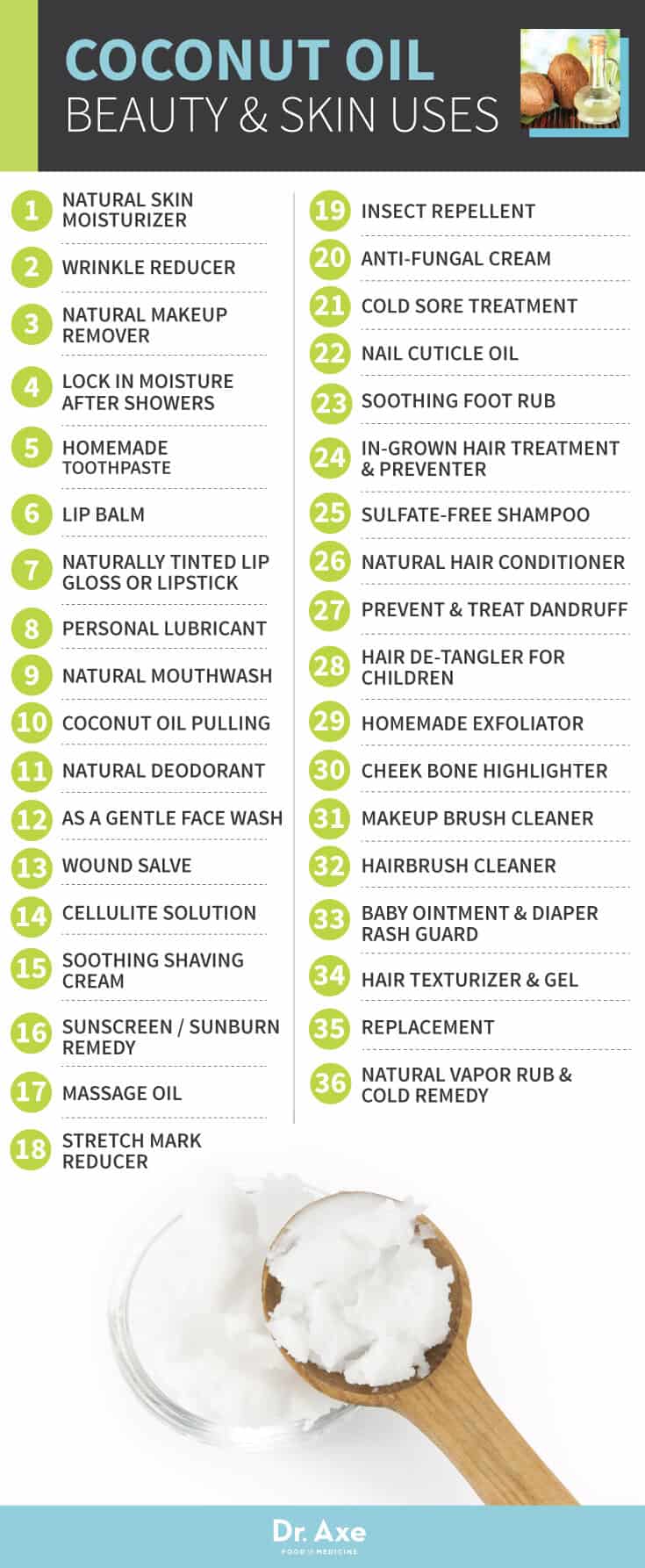
Coconut Oil Beauty & Skin Uses

16. Natural Skin Moisturizer – Using Coconut oil for skin health works well as a moisturizer for your face. It absorbs quickly, and is non-greasy. At room temperature, coconut is a solid, but it quickly melts when it comes into contact with hands. Before bed, wash your face, and pat dry. Warm a dollop the size of a pea in your hands and rub in a circular motion into your face. Let sit for 5 minutes, and then wipe off what is still on the surface.
17. Wrinkle Reducer – For areas of concern around eyes, dab just a touch around the eyes to help fight pre-maturing aging. Leave the oil on overnight to soak in, and wake up looking refreshed. Combine with frankincense oil for additional anti-aging benefits.
18. Natural Makeup Remover – Just a small dab of coconut oil will quickly liquefy eye makeup, making it easy to wipe off. Rub coconut oil gently onto the upper lids and lower lids in a circular motion. Wipe off with a warm cloth. The benefit over commercial eye makeup removers, is that coconut oil will not sting or irritate eyes, and as a bonus, will help to hydrate around the eyes.
19. Lock in Moisture After Showers – After your shower, apply coconut oil liberally all over your body. Coconut oil will hydrate dry skin, and helps to soothe skin after shaving. As a bonus, coconut oil has a natural SPF and is great to protect your skin from sun damage. If you are applying to the bottom of your feet, do so outside of the tub, so as not to slip.
20. Healing Bath with Epsom Salt – Regardless of the season, our skin takes a beating. Add ¼ cup Epsom salts and ¼ cup coconut oil to a warm bath, and relax. Add a drop or two of your favorite essential oils to add aromatherapy benefits. The Epsom salts will help to draw out toxins while the coconut oil will help to soothe dry skin.
21. Homemade Toothpaste – Mix equal parts of coconut oil with baking soda then add a few drops of peppermint essential oil for homemade toothpaste. Try my recipe for homemade probiotic toothpaste with coconut oil, Bentonite Clay, probiotics and peppermint essential oil.
22. Lip Balm – Dry chapped lips can happen during any season. Commercial lip balms are packed with unhealthy (and potentially toxic) ingredients, which is particularly concerning since we put them on our lips. The healing properties of coconut oil helps to nourish the lips, provides a touch of sun protection, and most importantly, is safe to consume. Combine 2 tablespoons of coconut oil with 2 tablespoons of beeswax, and 1 tablespoon of shea butter in a nonstick saucepan. Warm slowly until melted. Use a small funnel to refill used lip balm containers. Allow to set up for 6 hours.
23. Naturally Tinted Lip Gloss or Lipstick – You can naturally tint the lip balm recipe above with beetroot powder, cocoa powder, turmeric, and cinnamon. You only need a small amount of spices and a little bit goes a long way.
24. Personal Lubricant – Coconut oil is an effective and safe personal lubricant. Unlike commercial preparations, its anti fungal, antibacterial, and antimicrobial properties help keep the vaginal flora healthy.  (One note: avoid using coconut oil or any oil with any latex contraseptives, as it can corrode the latex.)
25. Natural Mouthwash – Mix equal parts of coconut oil and baking soda, and then add a few drops of peppermint essential oils.  Use daily to help whiten teeth, improve gum health, and freshen your breath. According to researchers at the Athlone Institute of Technology, the antibiotic properties of coconut oil destroy the bacteria that causes tooth decay.
26. Coconut Oil Pulling – To improve the health of your teeth and gums, oil pulling with coconut oil, is the way to go. In Ayurvedic medicine practice, oil pulling is used to detoxify the mouth, killing bad breath, fighting bacteria, cures tooth decay, and helps to boost the immune system. Swish 1 tablespoon of coconut oil immediately after rising in the morning. Spend 10-20 minutes swishing; do not swallow the oil. Spit the oil into the trashcan (not into the sink!) and rinse with sea salt water.
27. Natural Deodorant – Coconut oil’s natural antibacterial properties help to keep body odor at bay. It is an excellent deodorant on its own, or when combined into a paste with baking soda and essential oils.
28. As a Gentle Face Wash – Coconut oil can be used in natural face wash recipe to cleanse an moisturize. Mix with lavender oil, tea tree oil and raw honey for best results.
29. Wound Salve – Coconut oil has been used for thousands of years to speed healing of rashes, burns, and open wounds. You can use it just like you would neosporin. To make a homemade neosporin mix coconut oil, frankincense, lavender and melaleuca oil. The antibacterial and antifungal properties of coconut oil help to keep the area free of infection, and the lauric acid in coconut oil helps to speed healing.
30. Cellulite Solution – To fight stubborn and unsightly cellulite, mix 1 tablespoon of coconut oil with 10 drops of grapefruit essential oil and massage in a firm circular motion into affected areas. Follow with dry brushing to help stimulate circulation and encourage cellular detox and my cellulite slim down juice recipe for best results.
31. Soothing Shaving Cream – If razor burn, ingrown hairs, or other skin irritation is a problem after shaving, start using pure coconut oil as your shaving “cream”. Warm a dab in the palm of your hands and rub on your face, under arms, on the legs, or the bikini area and then shave. Rinse well, and pat dry.
32. Sunscreen / Sunburn Remedy – Coconut oil is an all natural sunscreen and sunburn remedy, all in one. In fact, it is SPF 4, just enough to protect against sun damage, and the best of the nonvolatile herbal oils. Reapply as necessary, throughout the day. If you get too much sun, gently rub coconut oil into affected areas and it will promote healing, and soothe the pain.
33. Massage Oil – Coconut oil is a soothing and conditioning massage oil. Add a couple of drops of lavender oil and peppermint oil to help heal sore muscles, and stimulate mindful relaxation.
34. Insect repellent – Mix a tablespoon of coconut oil with a couple of drops of peppermint, rosemary, and tea tree oil to repel flies, mosquitos, gnats, and bees. This is a safe alternative to DEET and can be applied safely on all areas of the body.
35. Anti-Fungal Cream – Due to its antibiotic capabilities, coconut oil can be used topically to treat athletes foot and skin fungus. Apply some to the affected area and either leave it on or wipe off with a paper towel after it has time to set in.
36. Cold Sore Treatment – If you experience cold sores in or around your mouth, trying dabbing them with coconut oil several times per day to reduce healing time and pain. Coconut oil contains lauric acid which if effective at entering the virus that lives within cold sores and shutting off their ability to reproduce. This means you experience relief faster and are less likely to have scars or discoloration left in the area of the sore too.
37. Nail Cuticle Oil – Apply coconut oil to your finger beds to reduce the risk of developing fungal infections and to make it easier to push back cuticles so your nails can naturally grow more quickly. If you go to manicure salons to get your nails done, you may be at risk for coming into contact with serious viruses and bacteria that often live on salon equipment, so coconut oil offers another layer or defense.
38. Soothing Foot Rub for Cracked Heels – Find relief for your dry, cracked heals naturally by rubbing them with coconut oil and allowing the oil to penetrate your skin. Try using 2 tablespoons of oil for both heels, and feel free to add other essential oils- like lavender oil- which can help to further reduce dryness and bacteria, plus give your feet a nice, relaxing scent.
39. In-grown Hair Treatment and Preventer – Rub areas where you frequently shave or are prone to bumps and infection with coconut oil. The oil helps to soften skin so hair can easily grow through the follicle properly without becoming ingrown, plus it kills bacteria at the same time.
40. Sulfate-Free Shampoo – Coconut can cleanse hair if used with apple cider vinegar, and because it doesn’t have any harsh chemicals in it. This method  leaves your color intact for longer, prevents dullness and orange or yellow discoloration, and makes your hair soft and shiny.
41. Natural Hair Conditioner – Using Coconut oil for hair conditioning has been used for thousands of years to strengthen and style hair. As a moisturizer, coconut oil can help strengthen hair while helping hair to retain moisture. Depending on the length and texture of your hair, you may need anywhere from 1 teaspoon to 2 tablespoons of coconut oil as a conditioner. Warm in the palms of your hands, and starting at the ends, work the oil into the hair.
42. Prevent and Treat Dandruff – This can help to encourage new hair growth, and will discourage dandruff. Rinse well (and then rinse again), and then style as usual. Your hair should be healthy, shiny, and full of body. If the coconut oil weighs your hair down, use less the next time, and rinse well.
43. Hair De-tangler for Children – Use a small amount of coconut oil on your children’s’ hair when it’s extra nutty and needs a natural, smooth solution for getting it brushed easily. Rub oil between your palms and then onto wet hair before combining through.
44. Homemade Exfoliator – Combine oil with organic coconut sugar or ground coffee beans to create a homemade facial or body scrub that will help remove dry skin. Do this twice weekly for smooth skin that is less likely to develop ingrown hairs, acne, blackheads, or other unwanted dullness.
45. Cheek Bone Highlighter – Try using coconut in place of makeup to add shine to your cheek bones and eye lids. This gives you a natural youthful glow and requires no make up, make up removal, or extra expensive products to purchase.
46. Makeup Brush Cleaner – Make up brushes are notorious for carrying loads of built-up harmful bacteriaRub coconut oil on your make up brushes and leave them for 1-2 hours in order to disinfect them. Then wash thoroughly, although there is no need to worry about any oil remaining on your brush since it won’t harm your makeup for skin.
47. Hairbrush Cleaner – Use coconut oil in the same way as on your makeup brushes to remove unwanted hair and bacteria from your hair brushes. The oil even works well on delicate bore bristle brushes and helps the hair to easily slide on. Any oil that remains on your brush will only condition the brush bristles and your hair more afterwards.
48. Baby Ointment and Diaper Rash Guard  When your baby experiences painful diaper rash, rub some coconut oil around the affected area to sooth swelling, redness, itch, and burn. Try using 1 tablespoon to start and allow it to seep into the skin.
49. Hair Texturizer and Gel Replacement- Many commercial brands of hair gel and mouse contain alcohol which dries out your hair, not to mention many other toxic chemicals and fragrances. Try using a bit of coconut oil rubbed into the ends of your hair to hold its style and condition it at the same time. The oil prevents fly aways and adds extra shine too.
50. Natural Vapor Rub and Cold Remedy – Combine coconut oil with eucalyptus oil and rub the mixture on your chest or the chest of your children to open up your airways and facilitate breathing. Together these two work to increase circulation and clear congestion to help you get a good night sleep when you’re sick.
51. Stretch Mark Reducer – Try rubbing coconut oil all over the stomach during and after pregnancy to reduce unsightly stretch marks that occur when skin’s elasticity is compromised. The oil helps to fade dark marks, discoloration, and redness plus it hydrates the skin and allows it heal more quickly.
Coconut-OIl_BeautyUses

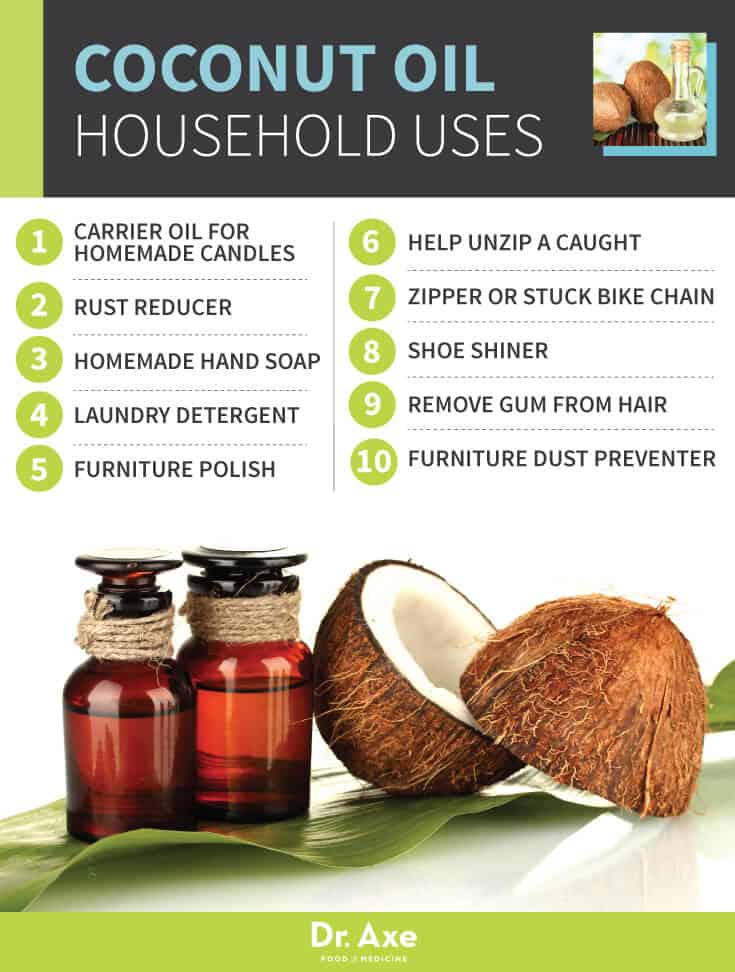
Coconut Oil Household Uses

52. Carrier Oil for Homemade Candles – Instead of buying expensive candles that contain artificial scents and chemicals, burn clean oil in your home using coconut oil and essential oils in an oil diffuser. These can be purchased online or at major home stores and give you endless ways to fill your home with healthy, inviting scents.
53. Help Unzip a Caught Zipper or Stuck Bike Chain – Apply coconut oil to chains or zippers that are jammed. The oil acts as a natural lubricant, allowing you to effectively break up a tough situation. Restore an old bike or a favorite pair of jeans by finally getting the chain or zipper to give!
54. Remove Gum From Hair or Furniture – If you’ve ever had gum stuck in your hair or on your coach, you know how frustrating this can be. Apply coconut oil to help the gum let up and easily get removed, without leaving any colors or stains.
55. Dust Preventer – Trying using a small amount of coconut oil on surfaces like wood, plastic, or cement that tend to gather dust. Rub a small amount of oil over the area and then allow it to dry, no need to wash it off or worry about it staining and attracting any bacteria.
56. Shoe Shiner – Instead of buying a leather repair kit or bringing used shoes to a repair shop, try subbing some coconut oil on your leather boots or patent heels to give them shine, disguise blemishes, and make them look fresh and new again.
57. Laundry Detergent – Combine coconut oil with lye, water, and essential oils of your choice to create a non-toxic soapy liquid that is perfect for cleaning clothes. The formula will not irritate your skin or have a negative affect on fabric, like many store-bought detergents can. This is a great solution for sensitive skin and those prone to allergies.
58. Furniture Polish – Use coconut oil on wood, granite counter tops, and metal surfaces to give your furniture and updates and clean, shiny look. At the same time this will help reduce dusk, cover up scratches, and clean your furniture and home surfaces too.
59. Rust Reducer – Rub some oil on your silver wear, outdoor metal furniture, car parts, or anything else that is metal and prone to rusting. Coconut oil helps to combat rust when you spread a thin layer of pure oil over the metal and let it sit for 1-2 hours. You can either wipe the oil off or wash it afterwards and should notice a difference right away.
60. Homemade Hand Soap – Use coconut oil to make homemade hand soap, and enjoy the flexibility to add any fragrance you want using essential oil. Try combining coconut oil with the substance Lye, or lard, which you can purchase online. The lye gives the soap natural texture and holds it together.
Coconut-OIl_HouseholdUses

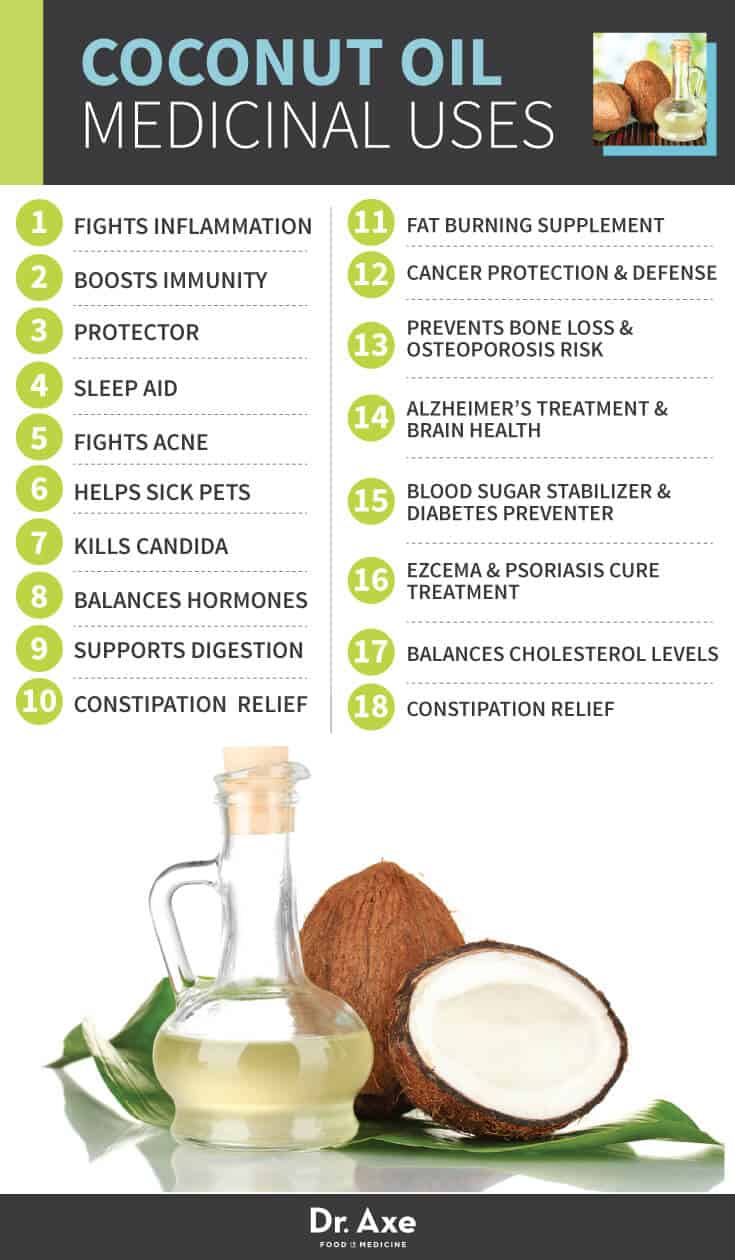
Coconut Oil Medicinal Uses

61. Fight Inflammation  Coconut oil supports both a healthy liver, and kidneys. According to researchers, virgin coconut oil, prepared without chemical or high-heat treatment exhibits an inhibitory effect on chronic inflammation. As inflammation is one of the leading causes of many chronic diseases, this study supports regular consumption of virgin coconut oil to help fight inflammation.
62. Boost Immunity – Coconut oil’s unique nutrition profile that is rich with lauric acid, capric acid and caprylic acid provides for strong antiviral, antifungal, antimicrobial, and antibacterial properties that have an immune boosting effect. By fighting these elements present in the body, the immune system is better equipped to respond properly when attacked.
63. Prevent Bone Loss and Osteoporosis Risk – Free radicals and oxidative stress are linked to the development of osteoporosis, a metabolic disorder. According to a recent study, virgin coconut oil is effective in maintaining bone structure, and preventing bone loss in estrogen-deficient rats. The report specified virgin coconut oil due to its high polyphenols and exerts antioxidant properties and you should take 3 tbsp daily for best results.
64. Alzheimer’s Treatment and Brain Health Protector – There are several reports that coconut oil may be an effective natural treatment for alzheimer’s disease. A current double blind study recommends taking 1 tbsp 3x daily.
65. Sleep Aid – Coconut oil is a perfect carrier oil when making soothing and relaxing home remedies using essential oils, like lavender or roman chamomile oil, that can help reduce anxiety and aid in getting a good night sleep.
66. Acne Fighter – Acne is a serious issue for adults in addition to teens and is commonly caused by bacteria overgrowth or an imbalance in oil on the skin. Coconut oil acts as a natural antibiotic, killing harmful bacteria that leads to serious breakouts. Try mixing the oil with tea tree oil and raw honey for added benefits and effectiveness..
67. Cancer Protection and Defense – Coconut oil and medium-chain triglycerides have been shown to provide a “potent antitumor effect and maintenance of a normal immune system” supporting the belief that coconut oil can help protect from certain types of cancers.
68. Candida Killer – Coconut oil contains caprylic acid which has anti-microbial properties that can kill yeast and candida. In a recent study, researchers found that coconut oil was active against species of Candida at 100% concentration, greater than the drug fluconazole. Add 1 tablespoon of coconut oil to your diet, and apply pure coconut oil directly to affected areas twice per day, until symptoms resolve. Follow my candida treatment protocol to help beat Candida.
69. Fat Burning Supplement – The MCT’s found in coconut oil have been proven to support weight loss and help your body burn fat for energy. Sounds odd right? Adding fat to your diet to burn fat? But the truth is not all fats are created equal. Add a tablespoon a day to reap the benefits of these fatty acids that may help to reduce abdominal fat. According to a study published in the American Journal of Clinical Nutrition, consumption of MCT oil leads to a greater rate of weight and fat mass loss than olive oil.
70. Hormone Balancer – The healthy fats in coconut oil support the thyroid and adrenal glands which can lower cortisol to naturally balance hormones. Coconut oils helps to suppress inflammation, while supporting healthy metabolism, two things that are essential for balanced hormones. The lauric acid, and other compounds support the thyroid and adrenal glands. This helps to lower cortisol, and naturally balance the hormones.
71. Digestive Support – Coconut oil is easy to digest and contains compounds that destroy bad bacteria, promote growth of probiotics and helps heal leaky gut. Coconut oil promotes the growth of healthy probiotics in the digestive tract.  The antibacterial, antifungal, and antimicrobial properties help to control parasites, and fungi, while aiding in the efficient absorption of essential nutrients.
72. Blood Sugar Stabilizer and Diabetes Preventer – Coconut oil can help balance blood sugar levels and has been medically proven to improve diabetes. Coconut oil can help balance blood sugar levels by encouraging efficient secretion of insulin from the pancreas. In a 2009 study, researchers found that medium-chain fatty acids “may therefore be beneficial for preventing obesity and  insulin resistance.”
73. Ezcema and Psoriasis Cure Treatment – Coconut oil can be used as cream to naturally heal dry and flaking skin for those with Eczema and Psoriasis. Mix coconut oil, shea butter and geranium oil for the best benefits.
74. Balance Cholesterol Levels – The healthy fats in coconut oil have been proven to increase HDL cholesterol and lower LDL cholesterol supporting heart health. According to a study reviewed by Harvard Medical School, coconut oil consumption increases HDL cholesterol, and improves the cholesterol ratio.
75. Constipation Relief – Many people swear by coconut to cure chronic constipation and relieve bloating. Try taking one tablespoon of coconut oil in the morning or before bed in order stay regular. The oil penetrates the digestive track and keeps things running smoothly by killing off harmful bacteria and allowing your gutflora to re-balance.
76. Fight Heart Disease– After decades of coconut oil being vilified due to its saturated fat content, new research is now proving that medium-chain fatty acids and coconut oil are beneficial to heart health and help lower high blood pressure.
77. Help Sick Pets – Just like their human caretakers, dogs and cats can benefit from the addition of coconut oil to their diet. Pets with digestive upset can benefit from a teaspoon or two of coconut oil mixed into their food. Skin allergies, irritations, and wounds can be soothed, and healing accelerated with a topical application. Unlike other salves, since it is edible coconut oil, there is no health risk if they lick it off their coats.
Coconut-OIl_MedinicalUses

As you can see, coconut oil uses are numerous and so are the health benefits.

Coconut Oil Nutrition Profile

Coconut oil, like other plant-based oils, does not contain cholesterol. The vast majority (more than 85%) of the fats in coconut oil are medium-chain triglycerides. These medium chain fatty acids (MCFA’s) found in coconuts has tremendous health benefits; they are easy to for the body to burn as fuel for energy and have anti-microbial properties, in addition to other important traits.
Coconut oil contains three unique fatty acids that are responsible for its various health benefits:
  • Lauric acid
  • Capric acid
  • Caprylic acid
These are some of the rarest substances found in nature and the reason why this oil is so beneficial.
Lauric acid has a particular structure that allows the body to absorb it easily.  Once absorbed, it morphs into monolaurin, found in human breast milk, and coconut milk and oil. Monolaurin is known for its antiviral, anti-micorbial, and antibacterial properties.
In addition, coconut oil contains linoleic acid, oleic acid, phenolic acid, myristic acid, Vitamin E, Vitamin K, and iron.

Organic Extra Virgin Coconut Oil vs. Refined Coconut Oil

To reap the many benefits of coconut oil, it is essential to choose organic unrefined coconut oil, preferably produced from a “wet-milling” process. Organic, unrefined coconut oil is extracted from fresh coconut meat; not from dried coconut.
The oil is then separated from the water, through centrifuge, fermentation, boiling or refrigeration. Fermentation is the preferred method to ensure that the coconut oil retains its inherent health benefits.
Unlike olive oil, coconut oil is thermally stable, and the antioxidants are not lost through the heating process. Multiple scientific studies conducted in Sri Lanka, Malaysia, and other countries where coconuts are native have shown that the wet-milling fermentation method followed by “hot extracted virgin coconut oil” produces the highest level of antioxidants and lowers bad cholesterol, while raising good cholesterol.
While the heat process may seem counter-intuitive based on what we know about heating and the destruction of nutrients, coconut oil reacts differently to heat than other foods. For example, the case with harmful GMO oils is usually the opposite; they have been heated to the point of oxidizing and becoming toxic.
According to a study published in Food Science and Biotechnology, virgin coconut oil that is produced with heat, results in the highest number of antioxidants. Researchers believe that this may be due to the release of polyphenols from the bound structure.
Refined coconut oil has a higher smoke point and is void of the coconut flavor. These coconut oils are mass-produced, typically through a chemical distillation process that starts with desiccated coconut that is not fresh. The coconuts are further bleached and deodorized to make them “more palatable” to the American consumer.
Some of these refined coconut oils are even hydrogenated, which turns this healthy natural oil, into a synthetic trans-fat. For this reason, avoid refined coconut oils as much as you possibly can.

33 Surprising Baking Soda Uses & Remedies

33 Surprising Baking Soda Uses & Remedies


Baking Soda Uses and Remedies Title
Many of us think of baking soda as an ingredient used for cooking, or even something that helps to keep our refrigerators odor-free, but baking soda is surprisingly good for your health and home, too!

FREE Guide: 33 Surprising Baking Soda Uses & Remedies
An inexpensive purchase (usually costing about $1), baking soda uses vary from basic daily hygiene, injuries, digestive issues, stomach pain, coughs and sore throats.
Throughout history, baking soda has been used as a rising agent when baking. It’s 100 percent sodium bicarbonate; so when mixed with acid, baking soda makes bubbles and gives off a carbon dioxide gas, causing the dough to rise.
Baking soda is known as nahcolite, which is part of the natural mineral natron. Natron contains large amounts of sodium bicarbonate and has been used since ancient times as a deodorizer, soother and cleanser.

Baking Soda Uses & Benefits

Baking soda is a great tool for cleaning and removing stains, but there are many health benefits associated with the use of baking soda, too. Some of the most common baking soda benefits include:
  • Eases stomach pain
  • Helps with digestive issues
  • Relieves bloating and gas
  • Fights off diseases
  • Neutralizes acid
  • Kills fungi, mold and parasites
  • Minimizes cough and sore throat
  • Reduces the duration of cold and flu
  • Helps pH balance
  • Reduces the symptoms of gout
  • Promotes kidney health
  • Treats urinary tract infections
  • Reduces muscle pain and fatigue

Top 33 Baking Soda Uses

Baking Soda Uses: FACE & SKIN

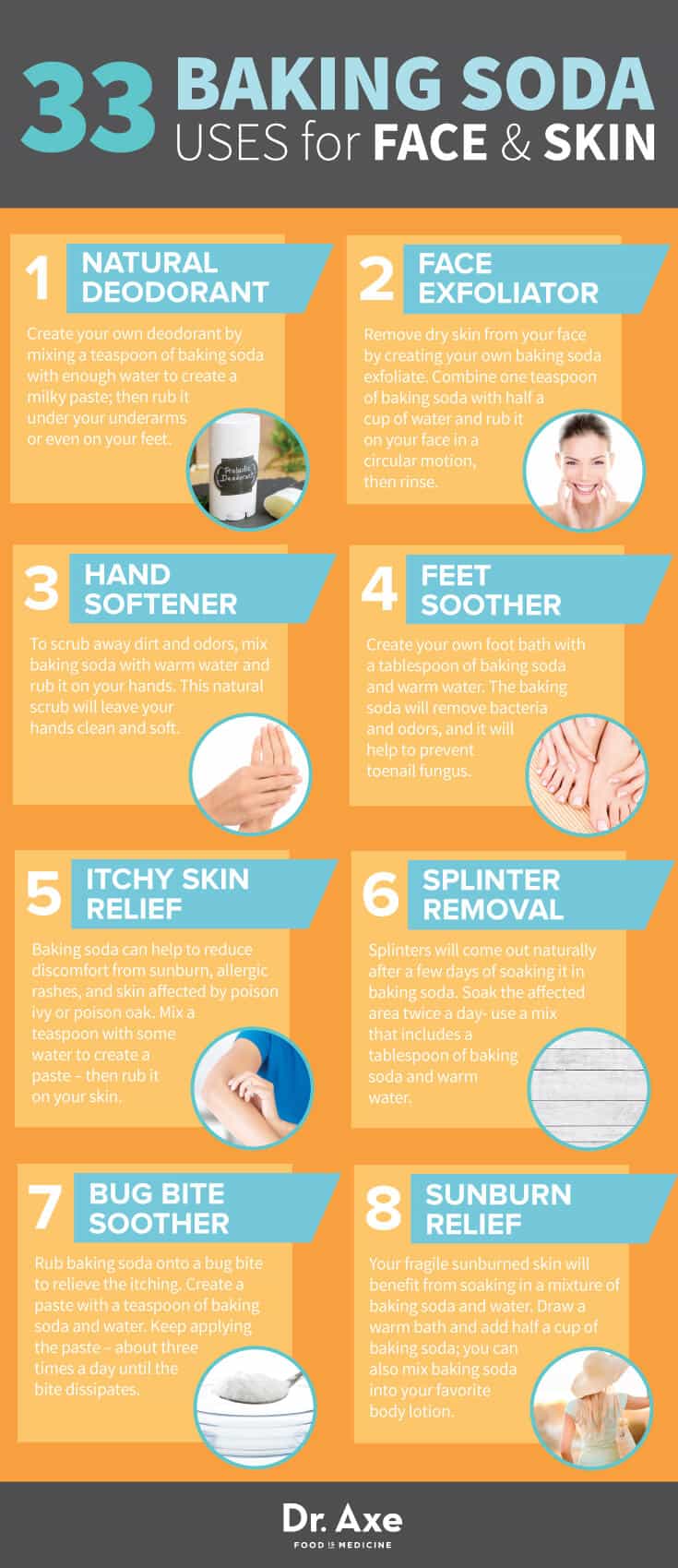
1. Natural Deodorant – Create your own deodorant by mixing a teaspoon of baking soda with enough water to create a milky paste, then rub it under your underarms or even on your feet.
2. Face Exfoliator – Remove dry skin from your face by creating your own baking soda exfoliate. Combine one teaspoon of baking soda with half a cup of water and rub it on your face in a circular motion, then rinse.
3. Hand Softener – To scrub away dirt and odors, mix baking soda with warm water and rub it on your hands. This natural scrub will leave your hands clean and soft.
4. Feet Soother – Create your own foot bath with a tablespoon of baking soda and warm water. The baking soda will remove bacteria and odors, and it will help to prevent toenail fungus.
5. Itchy Skin Relief – Baking soda can help to reduce discomfort from sunburn, allergic rashes, and skin affected by poison ivy or poison oak. Mix a teaspoon with some water to create a paste – then rub it on your skin.
6. Splinter Removal – Splinters will come out naturally after a few days of soaking it in baking soda (use a mix that includes a tablespoon of baking soda and warm water). Soak the affected area twice a day.
7. Bug Bite Soother – Rub baking soda on your bug bite to relieve the itching. Create a paste with a teaspoon of baking soda and water. Keep applying the paste – about three times a day until the bite dissipates.
8. Sunburn Relief – Your fragile sunburned skin will benefit from soaking in a mixture of baking soda and water. Draw a warm bath and add half a cup of baking soda; you can also mix baking soda into your favorite body lotion.
Baking Soda Uses for Skin & Face list infographic

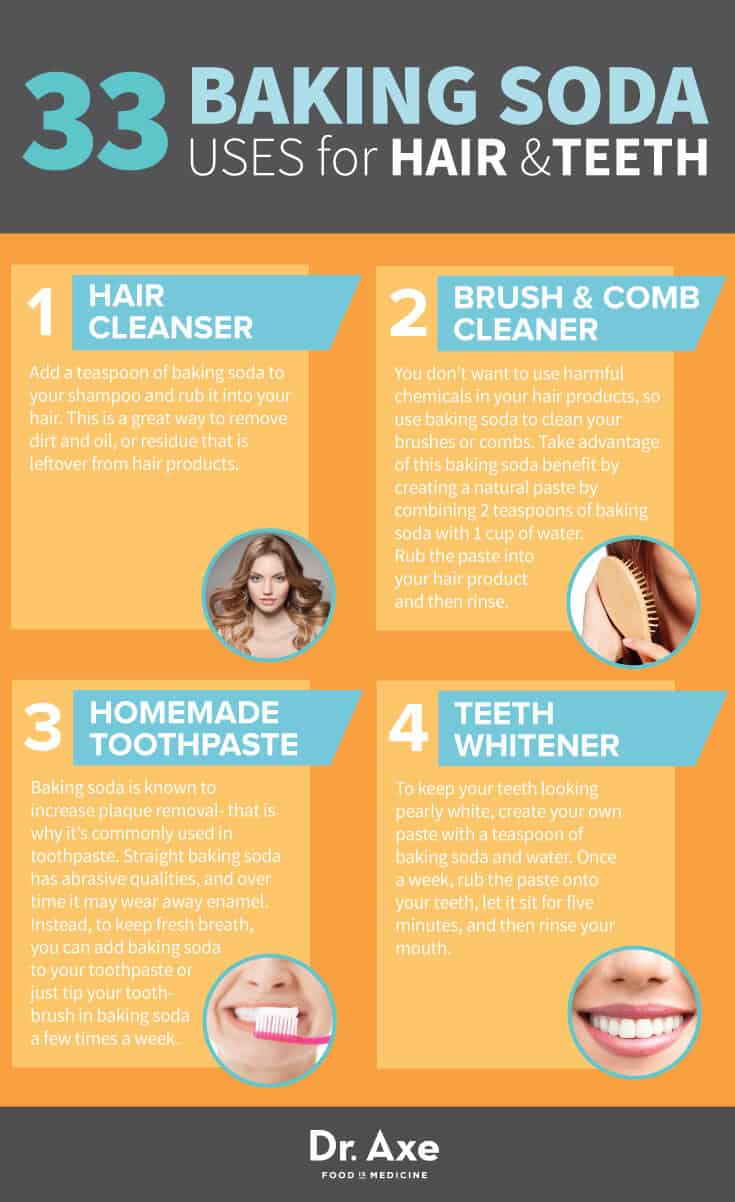
Baking Soda Uses: HAIR & TEETH

9. Hair Cleanser – Add a teaspoon of baking soda to your shampoo and rub it into your hair. This is a great way to remove dirt and oil, or residue that is left over from hair products.
10. Brush and Comb Cleaner – You don’t want to use harmful chemicals in your hair products, so use baking soda to clean your brushes or combs. Take advantage of this baking soda benefit by creating a natural paste by combining two teaspoons of baking soda with one cup of water. Rub the paste into your hair product and then rinse.
11. Homemade Toothpaste – Baking soda is known to increase plaque removal  that is why it’s commonly used in toothpaste. Straight baking soda has abrasive qualities, and over time it may wear away enamel. Instead, to keep fresh breath, you can add baking soda to your toothpaste or just dip your toothbrush in baking soda a few times a week. (1)
12. Teeth Whitener – To keep your teeth looking pearly white, create your own paste with a teaspoon of baking soda and water. Once a week, rub the paste onto your teeth, let it sit for five minutes, and then rinse your mouth. (2)
Baking Soda Uses for Hair & Teeth list infographic

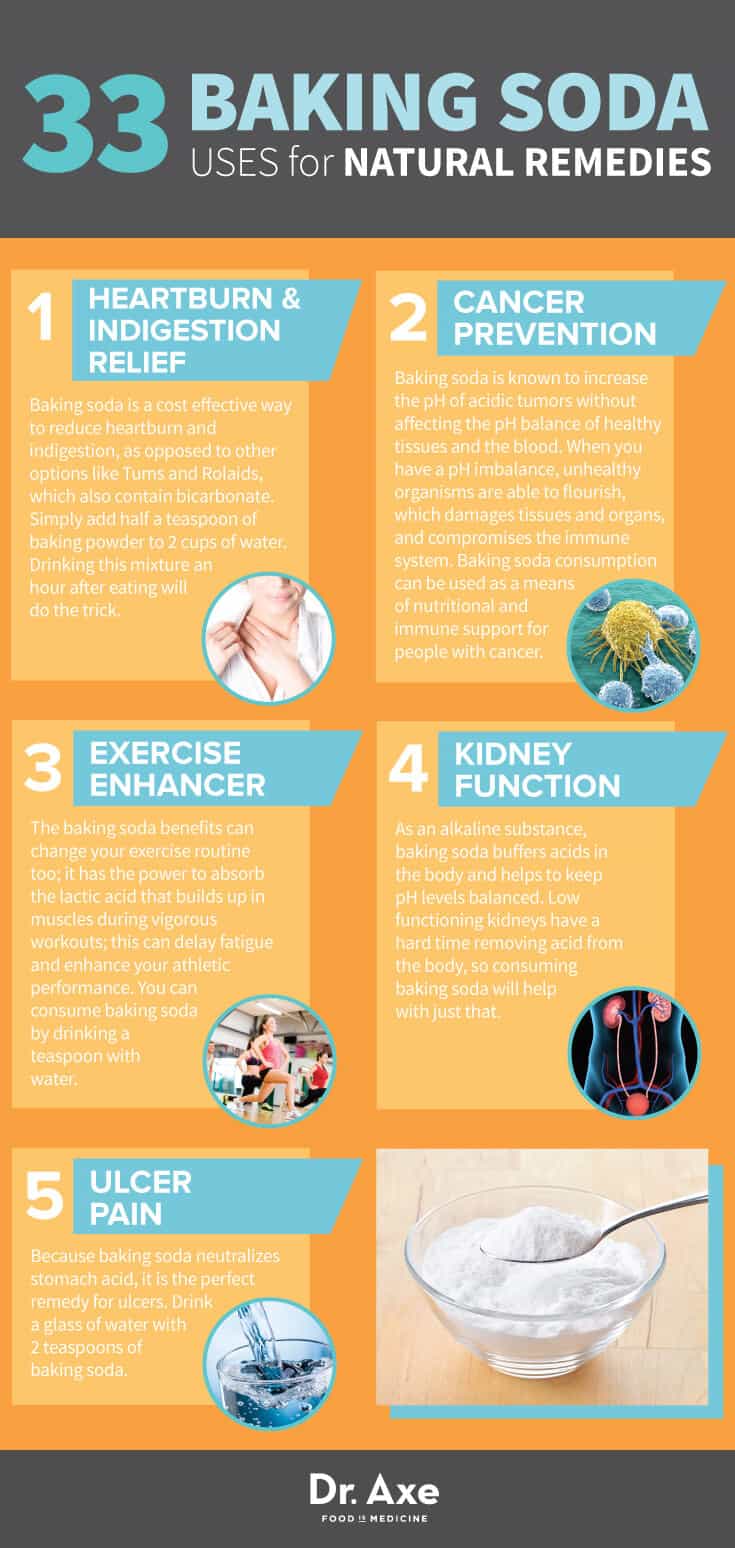
Baking Soda Uses: NATURAL HEALTH

13. Heartburn and Indigestion Relief – Baking soda is a cost-effective way to reduce heartburn and indigestion, as opposed to other options like Tums and Rolaids, which also contain bicarbonate. Simply add half a teaspoon of baking powder to two cups of water. An hour after eating, drink this mixture to gain some relief.
14. Cancer Prevention – Baking soda is known to increase the pH of acidic tumors without affecting the pH balance of healthy tissues and the blood. When you have a pH imbalance, unhealthy organisms are able to flourish, which damages tissues and organs, and compromises the immune system. Baking soda consumption can be used as a means of nutritional and immune support for people with cancer.
15. Exercise Enhancer – The baking soda benefits can change your exercise routine, too. It has the power to absorb the lactic acid that builds up in muscles during vigorous workouts, which can delay fatigue and enhance your athletic performance. You can consume baking soda by drinking a teaspoon with water.
16. Improve Kidney Function – As an alkaline substance, baking soda buffers acids in the body and helps to keep pH levels balanced. Low-functioning kidneys have a hard time removing acid from the body, so consuming baking soda will help with just that.
17. Reduce Ulcer Pain – Because baking soda neutralizes stomach acid, it’s the perfect remedy for ulcers. Drink a glass of water with 1-2 teaspoons of baking soda to relieve symptoms.
Baking Soda Uses for Natural Remedies List Infographic

Baking Soda Uses: HOME 

18. Natural Kitchen Scrub – Sprinkle baking soda on the surfaces in your kitchen and use a sponge or rag to scrub. You can even add lemon, lavender or peppermint essential oil to add a natural and healing fragrance to this DIY cleaning product.
19. Pots and Pans Cleaner – Baking soda can be used to hand wash pots and pans, and it won’t hurt these valuables either. Just let them soak in baking soda for 15-20 minutes … the grease, grim or food will come right off.
20. Carpet Cleaner – Many carpet cleaners include chemicals that can be harmful to your pets or children, so use baking soda to give your carpet a good cleaning instead. Sprinkle your carpet with baking soda; let it sit for 15-20 minutes, and then vacuum.
21. Gentle Baby Clothes Cleanser – Baking soda can be used as a natural cleanser and even a fabric softener. It’s the perfect way to clean baby clothes — just add one cup to your laundry load.
22. Fruit and Veggie Scrub – Make your own natural scrub by adding a teaspoon of baking soda to water. The pasty mixture is a perfect way to remove bacteria from your fruits and veggies.
23. Silverware Cleaner – Create a paste that is three parts baking soda and one part water. Rub the paste onto your silverware and let it sit in a large tray or bowl. After 15-20 minutes, rinse the silverware.
24. Microwave Cleaner – Don’t use harmful chemicals to clean your microwave; instead, just add a teaspoon of baking soda to a damp rag. This combination will wipe away food and grease easily.
25. Drain Cleaner – Mix baking soda with apple cider vinegar to create your own drain cleaner. This is a much safer option than the harmful chemicals that are typically used to clear drains. Let the combination bubble for 15 minutes, then rinse it with hot water.
26. Dish-Washer Helper – Add baking soda to your regular dish washing cycle; this will help to eliminate unwanted grease and grime that builds up on your dishes.
27. Fire Extinguisher – If you experience a minor grease fire in your kitchen, you can use baking soda to put it out. Pour baking soda on the fire and it will stifle the flames instantly.
28. Shoe Deodorizer – Can’t get that smell out of your shoes? Sprinkle baking soda inside your shoes and the smell will clear up within minutes.
29. Coffee and Tea Pot Cleaner – To remove coffee stains and funky tastes from your coffee or tea pot, make this quick mixture: one-fourth cup of baking soda with one quart of warm water. Rub the mixture on and in your pots; if you are battling tough stains, let it sit for a few hours first and then rinse.
30. Shower-Curtain Cleaner – Get rid of those stains that show up on shower curtains by rubbing baking soda onto them. Add a little water and the grime will be gone shortly.
31. Closet Freshener – To keep your closet smelling clean and fresh, place a box or cup of baking soda inside.
32. Wash Your Car – Ever hear of a baking soda car wash? Because baking soda easily removes grease and dirt, it’s the perfect ingredient for the ultimate car cleaning. Create a paste with one-fourth cup of baking soda with one cup of warm water. With a sponge or rag, rub the paste onto your car (tires, lights, seats, windows) and then rinse. Or dilute in a gallon of water to remove dirt and grime off your paint as well — just make sure to thoroughly dissolve as baking soda is abrasive in its powdered state.
33. Kitty-Litter Deodorizer – To keep your cat box smelling as fresh as possible, cover the bottom of the box with baking soda first, and then fill it in with kitty litter as usual. After cleaning out the liter, give the box a quick refresher by sprinkling baking soda on top.
Baking Soda Uses for Home infographic list

Recommended Dosage for Baking Soda

Recommended dosages from the Arm and Hammer Company for colds and influenza date back to 1925. The company broke the doses up into a three-day period.
The first day consists of six doses of a half-teaspoon of baking soda in a glass of cool water, at about two-hour intervals.
On the second day, the company advises that the individual take four doses of a half-teaspoon of baking soda in a glass of cool water, at the same intervals.
The third day includes two doses of a half-teaspoon of baking soda in a glass of cool water, morning and evening, and thereafter a half-teaspoon of baking soda in a glass of cool water each morning until the cold or flu symptoms are cured.
If you are using baking soda to reduce acidosis (a high level of acid in the body) induced by the diet or the aging process, the recommended dose is five grams daily. If you are using baking soda to treat a medical condition, and it has been more than two weeks, it’s a good idea to see your doctor to be sure that you can continue self-medicating.
Some doctors are using baking soda to treat yeast infections and even cancer. There is not enough research to prove that baking soda is an effective tool for treating cancer patients, but some doctors are using this alternative medicine. In these cases, baking soda is given via the mouth or into a vein. It’s also given intra-arterially (into an artery supplying blood to the tumor) and is sometimes given as a solution directly through the windpipe and into the lungs to treat lung cancer. (3)

Baking Soda Side Effects

Using baking soda on the skin or body is safe and nontoxic. Consuming baking soda orally is also safe, but don’t exceed the recommended dose. Too much baking soda can upset the body’s acid-base balance; it can also cause nausea and diarrhea when used in excess; it may also cause stomach cramps and an increase in thirst. (4)
Because baking soda is high in sodium — 1,259 milligrams in one teaspoon — high doses aren’t safe, for such doses can raise your blood pressure and cause swelling. In severe cases, it can overload circulation and lead to heart failure. People who consume too much baking soda have reportedly developed blood chemistry imbalances and heart malfunction (ineffective pumping). (5)
If you have edema, liver disease, kidney disease or high blood pressure, you should avoid taking baking soda internally. You should also refrain from consuming baking soda if you are pregnant or breastfeeding. Do not allow children under the age of five to consume baking soda.
If you are on prescription drugs, consult your doctor before consuming baking soda, and make sure you speak to your doctor about drinking baking soda if you are on a sodium-restricted diet.
Some products that may interact with baking soda include aspirin and other salicylates, barbiturates, calcium supplements, corticosteroids, medications with a special coating to protect the stomach, lithium, quinidine, and diuretics.

Friday, 25 August 2017

Citrus ichangensis x Citrus reticulata var. austera

Yuzu

Citrus ichangensis x Citrus reticulata var. austera

Herbs gallery - Yuzu

Common names

  • Japanese Grapefruit
  • Yuzu
Yuzu, scientific name Citrus ichangensis x Citrus reticulata var. austera, is a citrus fruit. These plants have their origin in East Asia and are thought to be a cross between Ichang papeda and sour mandarin. Normally, yuzu trees are low height trees, growing up to a height of anything between 6 feet (2 meters) and 25 feet (a little over 8 meters). The citrus fruits of this tree generally ripen during the end of fall, a little before several other citrus fruits.
The appearance of yuzu fruit is somewhat akin to that of a grapefruit, but it is comparatively very small and has a smooth skin. The color of yuzu may vary from green to yellow, subject to the fruit’s maturity. Yuzu fruits are extremely aromatic. Generally, yuzu fruits measure anything between 5.5 cm and 7.5 cm across. However, some fruits can grow as big as the standard grapefruit measuring up to 10 cm in diameter or even larger.
The yuzu plants are straight growing shrubs or petite trees that bear several large thorns. The leaves of this tree are notable owing to their large petioles, whose appearance is akin to those of closely related plants ichang papeda and kaffir lime. The yuzu tree leaves are extremely aromatic.
In several ways, yuzu bears a close resemblance to a Japanese citrus native to Tokushima Prefecture called sudachi. While both these citrus fruits have the same mandarin-ichang papeda lineage, when the sudachi ripens, its color changes to orange. In addition, the flavours of both these fruits too are slightly different.
Having its origin in China, yuzu is also found growing in the wild in central China as well as Tibet. During the Tang Dynasty, this plant was taken to Japan and Korea. As of now, the yuzu tree has been cultivated extensively in these countries.
The history of the yuzu tree dates back to more than 1200 years. Native to the region around the Yangtze River in China, this citrus fruit was introduced into Japan through the Korean peninsula. After the fruit was introduced in Japan in the Nara Period (710 A.D.), local farmers cultivated the plants for their fruits for three main purposes - culinary, therapeutic and hot bathing.
The yuzu tree remains attractive throughout the year. The foliage of the tree produces white enchanting flowers during spring. The green yuzu fruits appear in summer contributing to the tree’s texture. The sliced as well as grated raw fruit is used in salads and along with sashimi dishes. The fruits offer a spicy citrus flavour that is very delectable. The yuzu fruit ripens in winter and its color changes to vivid golden-yellow - something characteristic of this ornamental tree that is used for numerous purposes.
Apart from consuming the fruit raw as well as after cooking, people in Japan use the yuzu fruit for preparing an unusual hot bath.
It is a tradition in Japan to take a hot yuzu bath on the occasion of the winter solstice. Traditionally, people of Japan are of the view that taking a hot yuzu bath helps to protect against colds and flu that affect us and also aid in healing the chapped skin. In fact, when the yuzu fruit is put in hot water, it emits a very pleasing aroma. A substance called "nomilin", which is a constituent of the oil obtained from yuzu fruit rinds, is said to relax the body and mind, in addition to promoting circulation throughout the body. Hence, applying yuzu oil on the skin helps to make it extremely soft after the hot bath. In addition, people believe that taking a hot yuzu bath ensures plenty of good health. You are advised not to use any other citrus fruit like orange or lemon as a substitute for yuzu for a hot bath, as no other citrus fruit offers the same levels of aroma or health benefits as the yuzu fruit.

Parts used

Fruits, seeds, rind.

Uses

The yuzu fruit is extensively used for culinary purposes, in manufacturing cosmetics as well as scientific studies. Apart from these, the fruit is used medicinally for its therapeutic properties and also in several ancient rituals. The oil extracted from the rind of the yuzu fruit is sold in the form of an aroma. These fruits have been used to keep the body warm, protect people against common colds and flu as well as relaxing the mind. The aroma obtained from yuzu fruit was employed to make several products, including perfumes, soaps and lotions.
There is an unusual use of the yuzu fruits - they are used in a hot water bath with a view to prevent common colds, flu as well as heal chapped skin. In addition, the hot bath also promotes circulation throughout the body, thereby ensuring better health. Yuzu encloses high levels of vitamin C. Precisely speaking, 100 grams of this fruit offers 150 mg of vitamin C.
Yuzu is known to rejuvenate the mature/ aging skin. In fact, consumption of this fruit facilitates cell activation as well as fat burning. Vitamin P contained by yuzu fruits is responsible for encouraging healthy circulation all over the body, thereby alleviating muscle aches and relaxing the muscles of the body.
In very early times, people used the yuzu seeds in the form of a natural medication for treating itchiness and skin irritations. In addition, consumption of yuzu fruits is beneficial for people who want to overcome their drug addiction.

In Japan, people take a traditional hot yuzu bath on the winter solstice day to put off colds and flues, but you may enjoy this healthy and refreshing bath at any time of the year with a view to treat a number of health conditions like common aches and pains, rheumatism and arthritis. The oil extracted from yuzu rind is said to have a stimulating effect and it helps to improve the circulatory as well as the digestive systems.
The essential oil of yuzu is obtained from the rind of the fruit by a process known as cold expression. The process yields a light yellowish essential oil having a wonderful citrus fragrance. The aroma of this essential oil can be described as a scent that lies somewhere between those of mandarin and grapefruit, along with slight connotation of lime and bergamot. Yuzu essential oil is extremely dry as well as tangy and it reminds one of floral scents - something extremely enjoyable.
The essential oil extracted from yuzu is also employed in aromatherapy. This oil’s action is very much same as that of bergamot oil. It has a stimulating as well as elevating effect on our body and, at the same time, it helps the mind to calm down. Similar to the bergamot essential oil, yuzu oil too is a potent antioxidant and is strongly anti-bacterial, making this oil very useful for treating common colds and flu. Perhaps this is one reason why yuzu is so popular as well as successful in Japanese folk remedy for so long.
Yuzu essential oil is highly effectual for treating anxiety, stress, nervous tension and burn-outs, as its use helps in soothing as well as calming the tense nerves and normalizing emotions. In the same way, yuzu essential oil also uplifts the depressed mind, helps to overcome frustration and regret. This oil is also effective in boosting one’s confidence levels.
In olden days, people used the seeds of yuzu fruit in the form of a natural remedy for skin irritation as well as itchiness. The seeds were preserved with Shochu (a Japanese distilled beverage) or Sake. Currently, the seeds are used to make natural cosmetics meant for toning up the skin. In addition, consumption of yuzu fruits also helps the body to assimilate vitamin C as well as encourage healthy circulation of blood throughout the body - something that helps to prevent various health conditions.
Culinary uses
The yuzu is a citrus fruit that is also used for culinary purposes. The flavour of this fruit is something like a blend of mandarin, lemon and grapefruit. It has now been introduced in Western cuisine and is being used for flavoring several items, which includes beer, cocktails, vinegar and chewing gum. Precisely speaking, both the rind as well as the fruit juice is added to flavourings and beverages.
In Japan, the yuzu fruit juice as well as the rind are very popular among the folks and they extensively use both as flavoring agents. The juice and rind of this citrus fruit impart a very delectable, floral and lemon fruit-like tang to foods to which they are added. Apart from these, the juice and rind of yuzu are also employed to make a beverage similar to lemonade, marmalade, added to salad dressings and also included in ice creams.

Habitat and cultivation

The yuzu tree has its origin in China and is now cultivated commercially in Japan. This plant possesses the aptitude to adapt to a wide range of climatic conditions right from the tropical climates to sub-tropical climatic conditions and the Mediterranean. The yuzu trees need to be watered all through their growing season and, especially during the arid months of the year. The trees do not have the capacity to withstand prolonged periods of droughts.
Yuzu trees are generally propagated by their seeds and also through grafts. Generally speaking, almost all citrus trees are inclined to be hybridized. Although the yuzu trees produced from the seeds bear a very close resemblance to their parent plants, you can also hybridize the offsprings when you are growing this citrus variety from its seeds.

Constituents

Chemical analysis of the yuzu fruit has revealed that it encloses flavonoids, vitamin C and collagen. Both flavonoids and vitamin C possess antioxidant actions. In addition, yuzu also encloses malic acid (also known as fruit acid), which is helpful in treating muscle aches. Citric acid contained by the fruit has a vital role in promoting digestion.

Related resources

Essential Oil Diffusers and Burners - Practical, effective, and convenient are but a few words that come to mind when using an aromatherapy diffuser.
Herbal Bitters, Elixirs & Syrups - Have proven their superiority and ease of use.
Herbal Lozenges & Pastilles - They supply healing relief almost immediately, offering a compelling reason to reach for them in times of need.
Bulk Culinary and Sea Salt - The worlds most exotic, alluring and flavorful salts created with the artisan in mind.
Aroma Oils - 100% natural aroma oils created for just the right occasion and work wonderfully as a natural perfume

Detoxification

Detoxification

In our contemporary society, we normally blame anxiety, inadequate diet, biological organisms, genetics, and absence of exercise, physical as well as chemical means, autoimmunity, inflammation, anomalous growth and degeneration for occurrences of nearly all diseases. While it is true that to a great extent these components are responsible for most diseases, there is also a fundamental factor that adds to every health disorder endured by us. It is worth mentioning here that toxicity remains the most widespread factor. Coming in contact with toxic substances and their ensuing build-up in our body leads to innumerable health disorders - immediate as well as long-term.
However, the fact remains that we can possibly remain healthy even after being exposed to toxic substances. You should rest assured that it is not necessary to live in constant fear of being exposed to toxins or be fixated with the ‘poisonous world’ we live in or to resign ourselves to ‘germaphobia’. Although toxins are detrimental for our well-being, it does not mean that majority of the people need to make or flee to any isolated, germ-free milieu. It is possible to enhance our present health condition by undergoing simple therapies. For instance, detoxification procedures as well as balancing techniques may possibly help us in refurbishing our body and, at the same time, fortify the immune system. Undertaking commonsensical defensive methods are often good enough for our well-being, leading to an extended life and having notably lesser chances of developing degenerative ailments as well as other diseases.

What is a toxin?

Many people often ask what a toxic is. Precisely speaking, a toxin is any noxious substance that may be produced by plants, animals and even epidemiological bacteria. A different, but somewhat restricted, definition of toxin says that it is basically a xenobiotic, which denotes an alien chemical substance, which our body does not produce. In addition, the word toxin also denotes any substance that may prove to be unsafe or dangerous for our body or anything that disrupts the equilibrium of our body.

How are we exposed to toxins?

Right from the commencement of the history of humans, all people have come in contact with toxic substances that have had a negative impact on their health. During the course of several thousand years, there have been several changes in our body which enable us to put up with majority of the substances that occur naturally. Nevertheless, our exposure to toxins have increased manifold following the ‘Chemical Revolution, which took place following World War II, as well as the rampant industrialization across the globe. The exposure to harmful chemical substances has reached a point that is virtually inestimable. Precisely speaking, over the years, our body has been rapidly threatened by more than two million synthetic materials giving it hardly any time to get used to them. It may be noted that for the majority of people chemical exposure does not take place owing to spraying large amounts of pesticides or spillage of toxic substances. They actually happen from small or moderate exposures that take place day in and day out, adding to an accumulation of toxic compounds inside the body. As our bodies have not experienced these new synthetic substances earlier, they do not possess the effective means for metabolizing or getting rid of such toxic substances.
In current times, people suffer from various health disorders day after day, many of them caused by these toxins. On the one hand, there has been tremendous progress in the fields of science and industry; on the other hand, we also have had to suffer from it greatly. Today, the air we breathe in is not clean anymore; the soil has become polluted; the water supplied to our homes and offices encloses elevated amounts of microbes and noxious chemicals; and even the quality of food we consume is hazardously poor. In fact, it is even impossible to guarantee that the foods we eat are unadulterated.
Even as we go about our everyday routines, we come in contact with several toxic substances. For instance, we are exposed to toxins even while performing very simple things like bathing. Provided we have not been very careful while purchasing the products of our daily use, even carrying out our every day toiletries like shaving or applying makeup are most likely to expose us to harmful chemical substances. Similarly, when you visit a beauty salon or a barber shop, it could mean that you are being exposed to lots of harmful chemicals. Even going to a grocery store exposes you to an assortment of toxins that may include products meant for cleaning and laundry; products for personal care; and most of all pesticides, which may be stored in the premises. On the other hand, you are exposed to formaldehyde when you are making purchases in any mall or large stores offering products at discounted price. It is interesting to note that your body may be exposed to toxins even when you are going to school or work.
Irrespective of our occupation, all of us are subjected to toxic substances. For instance, mechanics usually working without protecting their skin always come in contact with solvents, oils, greases and gasoline. As many building materials contain different toxins, contractors and people engaged in carpentry and house painting are exposed to those harmful materials. People who are working in offices are subject to the chemical substances released by paper, copy machines, computers, fluids used for correction as well as the personal care items used by their colleagues. Even the teachers, whom you thought worked in a pollution-free environment, are subjected to office supplies as well as the personal products used by others, besides coming in contact with additional toxic substances. The condition of science teachers is worse, as they have to deal with many toxic chemicals in the laboratories. Similarly, teachers of industrial arts, auto mechanics, and those employed in shops also have to work with a wide range of toxic substances. Even individuals associated with medical care are exposed to medical supplies, cleaning products, laundry items and pesticides, which have an adverse affect on their health.
If you are staying indoors most of the time, it does not mean that you are not exposed to toxins. For instance, homemakers are subjected to various cleaning as well as laundry items, mold, dust, and the personal care products used by different family members. Even children are exposed to several toxic substances at home, in their school as well as when they are undertaking any recreational activity.
You Might Also Like
?

External toxins

We may come in contact with toxins in two different ways - internally and externally. Hence, they are categorized as external toxins or internal toxins. The toxins with which we come in contact in our everyday life are known as external toxins. External toxins may be found in air, water, foods, plants, herbicides, pesticides, microbes, chemicals used in agriculture and industry, solvents, toxic metals and even weather, noise, radiation and altitudes. These may affect us in various forms, including industrial pollution, or in the form of everyday toxins like cigarette smoke, perfume, and cleaning supplies.
Exposing ourselves to any of the above mentioned toxins may result in a range of symptoms in people who are very sensitive. These symptoms may include skin rashes, headaches, exhaustion, muscle aches, emotional disturbance, mental confusion, problems related to the nerves, weak coordination and also problems related to eyesight. In addition, toxic substances are known to be linked to weak functioning of the immune system, autoimmune diseases, hormonal imbalance, enzyme dysfunction, nutritional deficits, psychological anomalies and even cancer.

Internal toxins

Internal toxins are noxious substances that are either amassed or produced within our body. Our bodies work in the same manner as sponge and take up many chemicals that we come in contact with. While chemicals that are soluble are soaked up and later excreted, those that are soluble in fat build up inside the cells as well as cell membranes of our body, turning out to be internal toxins. When the body is under pressure, these internal toxins are freed by the body to flow in the bloodstream. Subsequently, these toxic substances go back to the cells as well as cell membranes to be released again later. In fact, this cycle keeps on for an indefinite period unless we initiate some measure to detoxify ourselves or remove them from our body.
Chemicals that comprise internal toxins are generally the usual metabolic products. Metabolism or anomalous formation of usual chemicals in the body, for instance, neurotransmitters and hormones, may result in a detrimental imbalance. Substances produced by our body in reaction to a variety of conditions and turn out to be toxic when they are present in excessive quantities are also known as internal toxins. For instance, pollution, wounds and even anesthesia result in the body to generate free radicals that are noxious for all body tissues. In addition, undertaking exercises may also lead to the accumulation of too much lactic acid inside the muscles, causing the muscles to become stiff and painful when people are unable to process it appropriately.
It may be noted that even strain, emotional disturbances and the collective experiences of one’s life may turn out to be internal toxins. In effect, individuals undergoing emotive or spiritual trials may find particular detoxification techniques to be beneficial.
Internal toxins may lead to several symptoms, including headaches, exhaustion, loss of memory and mental confusion. In addition, they may also result in irritation of the mucous membrane, symptoms akin to those of flu, problems related to the skin, iris inflammation (iritis) and musculoskeletal pains. Internal toxins may also lead to gastrointestinal symptoms like vomiting, nausea and diarrhea.